



HCLS
Patient cases that intake, consent, and route themselves.
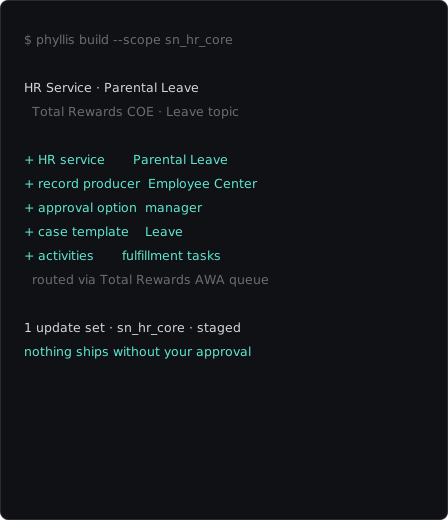
Phyllis builds and extends your entire healthcare service operation — any case type, consent policy or care-team routing — grounded in your live instance and staged for your approval.


Scan HCLS setup
Show me how healthcare cases are handled today and what consent capture runs.
 Sonnet 5 Low
 Healthcare case type
Stand up a Prior Authorization case type on the healthcare case model.
Sonnet 5 Low Consent policy
Author a treatment-consent policy patients acknowledge before an appointment.
Sonnet 5 Low Privacy notice
Publish a Notice of Privacy Practices patients accept at registration.
Sonnet 5 Low Care-team routing
Route member cases to the right care team by plan and urgency.
Sonnet 5 Low Case lifecycle
Walk me through the healthcare case lifecycle and where each stage transition lives.
Sonnet 5 Low Patient portal
Extend the patient portal so members can book appointments and share insurance info.
Sonnet 5 Low Appointment intake
Turn appointment requests into tasks the front desk can pick up.
Sonnet 5 Low Directive on file
Add an advance-care-directive policy patients can record in the portal.
Sonnet 5 Low Priority tiers
Add an urgent tier for time-sensitive prior-authorization cases.
Sonnet 5 Low Consent tracking
Show which patients have acknowledged the privacy policy and which are still outstanding.
Sonnet 5 Low Case reporting
Inventory today's healthcare case reporting before I design a care-operations dashboard.
Sonnet 5 Low Scan HCLS setup
Show me how healthcare cases are handled today and what consent capture runs.
Sonnet 5 Low Healthcare case type
Stand up a Prior Authorization case type on the healthcare case model.
Sonnet 5 Low Consent policy
Author a treatment-consent policy patients acknowledge before an appointment.
Sonnet 5 Low Privacy notice
Publish a Notice of Privacy Practices patients accept at registration.
Sonnet 5 Low Care-team routing
Route member cases to the right care team by plan and urgency.
Sonnet 5 Low Case lifecycle
Walk me through the healthcare case lifecycle and where each stage transition lives.
Sonnet 5 Low Patient portal
Extend the patient portal so members can book appointments and share insurance info.
Sonnet 5 Low Appointment intake
Turn appointment requests into tasks the front desk can pick up.
Sonnet 5 Low Directive on file
Add an advance-care-directive policy patients can record in the portal.
Sonnet 5 Low Priority tiers
Add an urgent tier for time-sensitive prior-authorization cases.
Sonnet 5 Low Consent tracking
Show which patients have acknowledged the privacy policy and which are still outstanding.
Sonnet 5 Low Case reporting
Inventory today's healthcare case reporting before I design a care-operations dashboard.
Sonnet 5 Low