
Public Sector
Constituent services that intake, route, and resolve themselves.
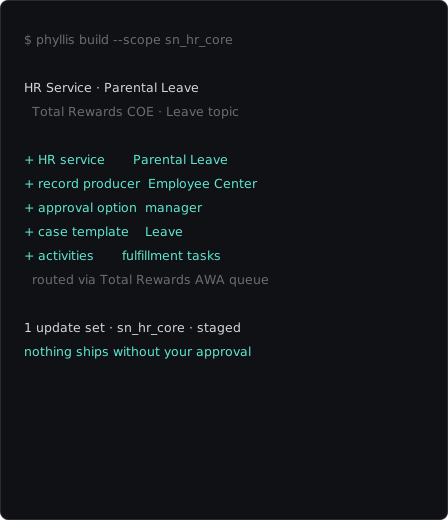
Phyllis builds and extends your entire government-services operation — any case type, intake form or benefit-routing rule — grounded in your live instance and staged for your approval.


Scan services setup
Show me how constituent service requests are taken in and handled today, and where the gaps are.
 Sonnet 5 Low
 Government case model
Set up a government service case type for housing-assistance applications with the fields we capture.
Sonnet 5 Low Constituent intake
Build a constituent application on the citizen portal that opens a case when submitted.
Sonnet 5 Low Program routing
Route benefit applications to the right program team based on the assistance type.
Sonnet 5 Low Case lifecycle
Walk me through the application lifecycle and where each stage transition happens.
Sonnet 5 Low Document verification
Add a document-verification step so caseworkers confirm proof of identity before approval.
Sonnet 5 Low Business registration
Stand up a business-registration service so businesses can register and track their filing.
Sonnet 5 Low Eligibility triage
Add an eligibility triage that flags incomplete applications before they reach a caseworker.
Sonnet 5 Low PII handling
Restrict who can see sensitive constituent details like SSN and date of birth.
Sonnet 5 Low Caseworker guide
Attach a published caseworker guide to benefit cases with the review steps.
Sonnet 5 Low Applicant updates
Notify applicants automatically when their case reaches a decision.
Sonnet 5 Low Services reporting
Inventory today's constituent-services reporting before I design a program dashboard.
Sonnet 5 Low Scan services setup
Show me how constituent service requests are taken in and handled today, and where the gaps are.
Sonnet 5 Low Government case model
Set up a government service case type for housing-assistance applications with the fields we capture.
Sonnet 5 Low Constituent intake
Build a constituent application on the citizen portal that opens a case when submitted.
Sonnet 5 Low Program routing
Route benefit applications to the right program team based on the assistance type.
Sonnet 5 Low Case lifecycle
Walk me through the application lifecycle and where each stage transition happens.
Sonnet 5 Low Document verification
Add a document-verification step so caseworkers confirm proof of identity before approval.
Sonnet 5 Low Business registration
Stand up a business-registration service so businesses can register and track their filing.
Sonnet 5 Low Eligibility triage
Add an eligibility triage that flags incomplete applications before they reach a caseworker.
Sonnet 5 Low PII handling
Restrict who can see sensitive constituent details like SSN and date of birth.
Sonnet 5 Low Caseworker guide
Attach a published caseworker guide to benefit cases with the review steps.
Sonnet 5 Low Applicant updates
Notify applicants automatically when their case reaches a decision.
Sonnet 5 Low Services reporting
Inventory today's constituent-services reporting before I design a program dashboard.
Sonnet 5 Low